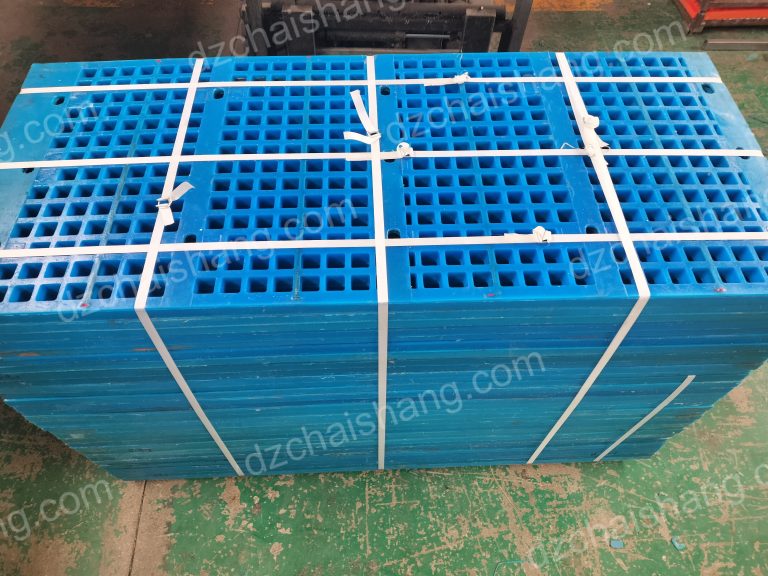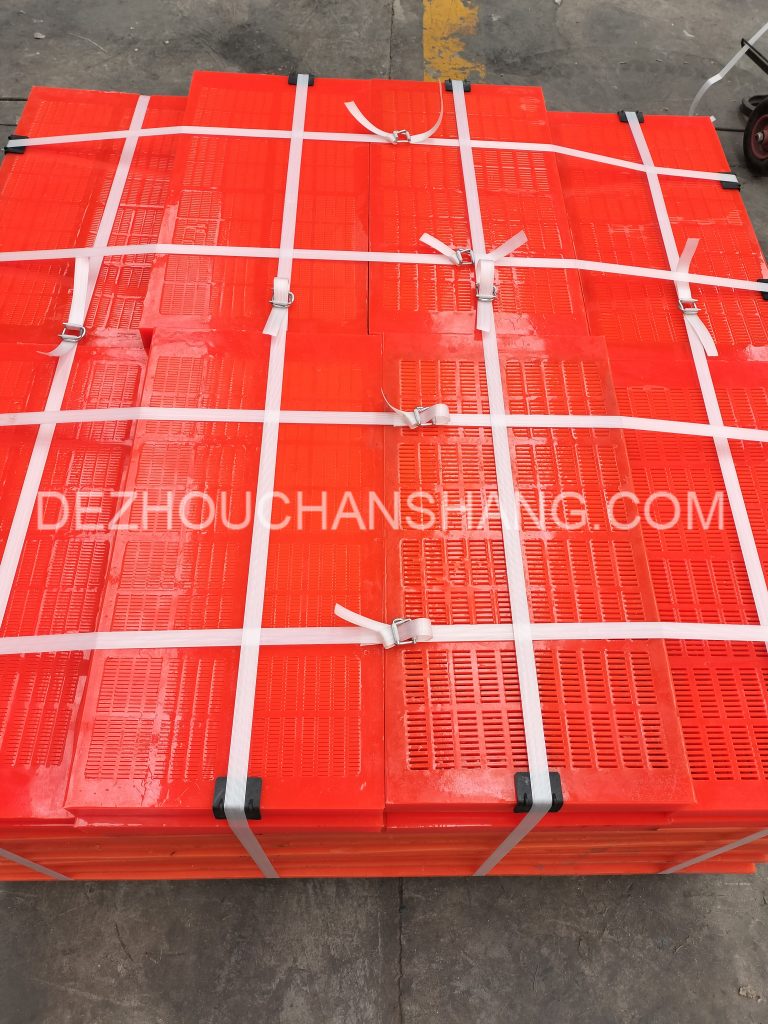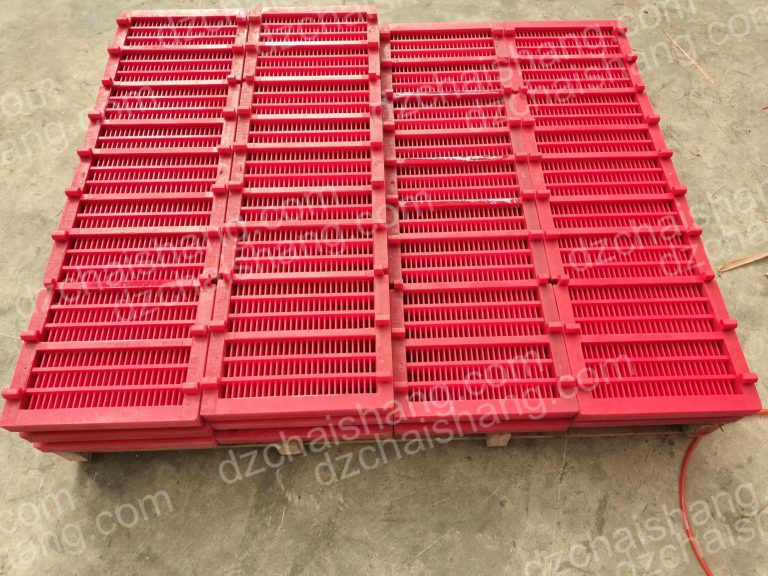
We’ve finished the exhibition, but are we leaving South America just yet?
You want maximum screening efficiency and think a high open area is the only answer. But this can lead to frequent breakages…
You want maximum screening efficiency and think a high open area is the only answer. But this can lead to frequent breakages and costly downtime, destroying your productivity and profits.
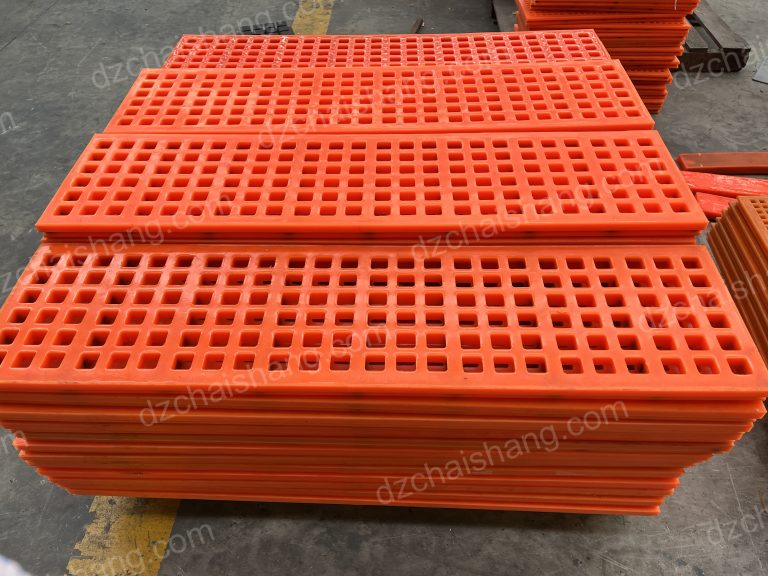
A very high open area often weakens the <a href="/tag/screen-panel" target="_blank"><strong><a href="/tag/screen" target="_blank"><strong>screen</strong></a> panel</strong></a>'s structure, especially with large apertures.[^1] The thin material between holes can't withstand heavy ore impact, leading to premature failure.[^2] Durability and structural integrity are just as crucial for overall efficiency as the open area itself.

It seems logical, doesn't it? More holes mean more material can pass through, leading to higher throughput and less chance of the screen getting blocked. It’s one of the first things engineers look at when designing a screening circuit. For years, I’ve seen clients come to me with drawings that push the open area to its absolute limit, believing they’ve cracked the code to perfect screening.
But I’ve also seen this "logical" choice backfire spectacularly. It's a classic case where focusing on one single metric comes at the expense of the entire system's reliability and performance. A screen panel is more than just a sheet with holes in it; it's a hard-working component that has to survive a brutal environment. Let's dig into why the obsession with open area can be a costly mistake.
Why Does a High Open Area Weaken the Screen Panel?
You've just installed a new screen with a massive open area, expecting record throughput. Instead, you're shocked when it cracks and falls apart after just a few weeks of use.
A high open area directly translates to less material, or "webbing," between the apertures. This webbing provides the panel's structural support. When it's too thin, it can't absorb the constant, heavy impact from ore, causing it to tear, crack, and fail prematurely.

Think of the screen panel like a bridge. The open area is the space cars drive through, but the "webbing" is the steel beams, support pillars, and cables that hold the entire structure up. You can't make the lanes wider and wider by removing the support pillars; the bridge would collapse. It's the exact same principle with a screen panel. The material between the holes, which we call the webbing or land area, is responsible for absorbing immense forces. Every piece of ore that hits the screen delivers an impact force, and the abrasive nature of the material tries to wear it away. The entire panel is also under constant tension and vibration from the screen deck itself.
The Critical Role of Webbing Width
When the webbing is too thin, the stress becomes concentrated in very small areas.[^3] This is especially a problem where the corners of square apertures meet. These become natural weak points where cracks can start to form. Once a small crack appears, the constant vibration of the machine will cause it to grow rapidly, leading to a complete failure of that section of the panel. This problem gets much worse when you're dealing with larger aperture sizes, like anything over 10mm.[^4] A large hole combined with thin webbing is a recipe for disaster under a heavy, coarse feed. The panel simply doesn't have enough body to hold itself together.
| Webbing Width | Open Area % | Structural Integrity | Common Outcome |
|---|---|---|---|
| Too Thin | Very High | Poor | Premature cracking, tearing, and failure. |
| Balanced | High | Good | Good throughput and a long, reliable life. |
| Too Thick | Lower | Excellent | Very long life, but potential for blinding. |
How Do You Find the Perfect Balance for Your Application?
Choosing the right screen design feels like a difficult guessing game. The wrong choice leads to either constant blockages from a low open area or constant breakages from a weak structure.
The perfect balance depends entirely on your specific material and operating conditions. Key factors include ore size, weight, feed rate, and impact. A professional supplier can analyze these variables to recommend an optimal aperture and webbing width that maximizes both throughput and durability.

There is no "one-size-fits-all" answer. The ideal screen for a sand and gravel operation is completely different from one needed in a primary crushing circuit at a copper mine.[^5] Finding the sweet spot is a process of engineering, not guessing. It requires a deep understanding of the application. I remember a client in Chile who sent us a drawing for a panel with a 75% open area for their copper ore screening. On paper, it looked like it would move a mountain of material. But I knew their feed contained rocks up to 150mm. Those panels wouldn't last a month.
Key Factors for an Optimal Screen Design
We had to have a frank conversation. I explained that a screen running at 65% open area is infinitely more productive than a broken screen with 0% productivity. The math on downtime costs alone is staggering. We proposed a new design that reduced the open area to 65% but more than doubled the webbing width in critical areas.[^6] They were hesitant, but they trusted our experience. Those new panels ended up lasting over eight months, saving them a fortune in maintenance labor and lost production.[^7] To get it right, you have to consider:
- Material Characteristics: What is the top size of the feed? What is its density and abrasiveness? [Heavy, sharp, abrasive ore requires a much stronger panel with wider webbing than light, round river stone.](https://revamppanels.com/products/architectural-metal-<a href="/tag/screens" target="_blank"><strong>screens</strong></a>)[^8]
- Operating Conditions: How many tons per hour are you feeding onto the screen? How far does the material drop before it hits the panel? High-impact applications need more robust construction.[^9]
- Screening Goals: What is your number one priority? Is it the most precise sizing possible? Is it maximum throughput above all else? Or is it maximum wear life to reduce maintenance shutdowns? Often, you have to make a small compromise on one to gain a large advantage in another.
What Should You Ask Your Supplier About Screen Design?
You're ready to order new screens but you only know to specify the aperture size. Ordering based on one or two metrics alone can lead to disappointing results and wasted investment.[^10]
Instead of just specifying an open area, provide your supplier with your operational data. Ask them to justify their proposed design based on your material type, feed size, and desired wear life. A good supplier will explain the trade-offs and engineer a solution for you.

A great supplier doesn't just take your order; they act as a consultant.[^11] I always tell my customers, if a potential supplier just says "yes" to your drawing without asking a single question, that's a huge red flag. They are simply a fabricator, not a solutions partner. A true expert will want to know everything about your operation because their success is tied to your success. They should be reviewing your request and looking for opportunities to improve it. When we receive a drawing from a client, our first step is to analyze it against their operating data. More often than not, we suggest improvements, like increasing the webbing width or changing the hole shape, to ensure the panel is both strong and efficient.
Your Pre-Order Checklist
This should be a collaborative process. To get the best possible product, you need to provide the right information and ask the right questions.
Information to Provide Your Supplier:
- Type of material being screened (e.g., iron ore, sand, granite).
- Maximum feed size (top size) and general particle size distribution.
- Feed rate in tons per hour (TPH).
- Type of screening (wet or dry).
- The make and model of your screening machine.
Questions to Ask Your Supplier:
- "Based on my data, what open area and webbing width do you recommend, and why?" This forces them to explain their engineering logic.
- "What is the expected wear life for this design in my application?" This makes them put a number on their promise of quality.
- "Can you explain the structural features of this panel that make it durable?" This shows you they've thought about more than just the holes.
- "Do you have case studies or references for this design in an application similar to mine?" This proves they are selling a proven solution, not just a product.
Conclusion
In conclusion, don't chase a high open area at all costs. The best screen panel is a balanced compromise between throughput and the structural strength needed for a long, reliable service life.
[^1]: "What Is Open Area Percentage? Definition", https://www.screenerking.com/pages/glossary-open-area-percentage?srsltid=AU7gw4V_5CK_cSJ57vBBy8dMx8Ta9Zifodozm1h4uD-tagMsX7s1UOkL. This source explains how high open area designs can compromise the structural integrity of screen panels, particularly under heavy impact conditions. Evidence role: mechanism; source type: research. Supports: High open area designs weaken screen panel structures, especially with large apertures.. [^2]: "Causes of failures in vibrating screens: A literature review", https://ui.adsabs.harvard.edu/abs/2024MiEng.21809027B/abstract. This source discusses the relationship between material thickness in screen panels and their ability to withstand heavy ore impact. Evidence role: mechanism; source type: research. Supports: Thin material between holes in screen panels leads to premature failure under heavy ore impact.. [^3]: "Structural Analysis of Slender Glass Panel Subjected to ...", https://proceedings.challengingglass.com/index.php/cgc/article/download/244/239/840. This source explains how stress concentration occurs in thin webbing areas of screen panels, leading to structural failure. Evidence role: mechanism; source type: research. Supports: Thin webbing in screen panels concentrates stress, leading to failure.. [^4]: "<a href="/tag/screening-media" target="_blank"><strong>screening media</strong></a> challenges and how to solve them", https://www.metso.com/globalassets/ebook/ebook-screening-media-5442-en.pdf. This source provides data on how larger aperture sizes exacerbate structural issues in screen panels. Evidence role: mechanism; source type: research. Supports: Larger aperture sizes worsen structural issues in screen panels.. [^5]: "Comparative Analysis of Touch Display Panels: Screen and ...", https://www.cdtech-display.com/knowledges/comparative-analysis-of-touch-display-panels-screen-and-panel-variations/. This source outlines the differences in screen panel requirements for sand and gravel operations versus primary crushing circuits. Evidence role: definition; source type: education. Supports: Screen panel requirements differ significantly between sand and gravel operations and primary crushing circuits.. [^6]: "What Is Open Area Percentage? Definition", https://www.screenerking.com/pages/glossary-open-area-percentage?srsltid=AU7gw4Xsfl3GR_VcmfdbgPLvt-p3_9Uytx7z-TEH9gYFjO5sMkBN6jKj. This source discusses engineering solutions for balancing open area and webbing width in screen panels. Evidence role: mechanism; source type: research. Supports: Reducing open area and increasing webbing width improves screen panel durability.. [^7]: "Design, Fabrication, and Installation of Engineered ...", https://www.huduser.gov/portal/publications/destech/panelized_walls.html. This source provides case studies or data showing how specific screen panel designs improved durability and reduced downtime. Evidence role: case_reference; source type: research. Supports: Improved screen panel designs can significantly extend service life and reduce maintenance costs.. Scope note: The support may be limited to specific case studies rather than general proof. [^8]: "Architectural Metal Screens", https://revamppanels.com/products/architectural-metal-screens. This source discusses the differing requirements for screen panels based on ore characteristics such as weight and abrasiveness. Evidence role: mechanism; source type: research. Supports: Heavy, sharp, abrasive ore requires stronger panels with wider webbing compared to lighter materials like river stone.. [^9]: "Mechanical Shock", https://www.sandia.gov/vqsec/facilities/mechshock/. This source explains why high-impact applications necessitate robust screen panel construction to withstand forces. Evidence role: mechanism; source type: research. Supports: High-impact applications require more robust screen panel construction.. [^10]: "New Contrast Metric for Realistic Display Performance Measure", https://pmc.ncbi.nlm.nih.gov/articles/PMC5489230/. This source explains why considering multiple metrics is essential for effective screen panel design. Evidence role: expert_consensus; source type: education. Supports: Focusing on one or two metrics alone in screen panel design leads to suboptimal results and wasted investment.. [^11]: "Supplier Quality Engineer", https://online-distance.ncsu.edu/career/supplier-quality-engineer/. This source discusses the role of suppliers as consultants in optimizing screen panel designs. Evidence role: expert_consensus; source type: education. Supports: Suppliers should act as consultants to optimize screen panel designs based on operational data..