
How Can You Tell If Your PU Screen Panel Material Is Bad?
It’s a frustrating problem. You order new <a href="/tag/polyurethane–screen-panels" target="_blank"><strong><a href="/tag/polyurethane-screen" target="_blank"><strong><a href="/tag/polyurethane" target="_blank"><strong>polyurethane</strong></a> <a href="/tag/screen" target="_blank"><strong>screen</strong></a></strong></a> panels</strong></a>, they arrive looking perfect,…
It’s a frustrating problem. You order new <a href="/tag/polyurethane-screen-panels" target="_blank"><strong><a href="/tag/polyurethane-screen" target="_blank"><strong><a href="/tag/polyurethane" target="_blank"><strong>polyurethane</strong></a> <a href="/tag/screen" target="_blank"><strong>screen</strong></a></strong></a> panels</strong></a>, they arrive looking perfect, but then they fail unexpectedly. This costs you money and creates downtime you can’t afford.
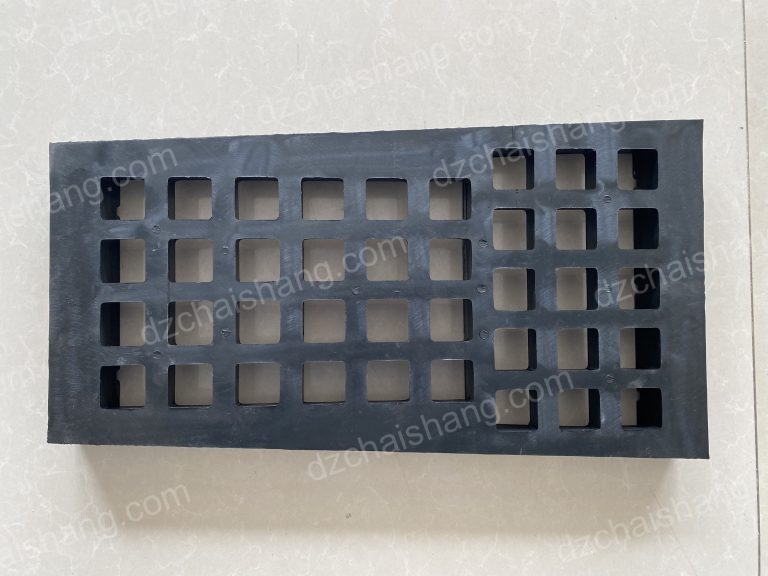
The best way to identify bad polyurethane (PU) material is by observing premature degradation, like cracking after just a few months in storage. This failure is caused by low-quality raw materials that cannot resist moisture, leading to a chemical breakdown long before the panel ever sees operational stress.

I remember a client calling me, completely confused. He said, "We received the <a href="/tag/screen-panels" target="_blank"><strong>screen panels</strong></a> three months ago. We haven't even installed them yet, and they're already cracking on the surface. What's going on?" He checked with his logistics company, and there were no issues with how they were stored. Everything pointed back to one thing: the material itself was bad from the start. This story isn't uncommon, and it highlights a critical truth in our industry: what you see on the surface isn't always what you get. The real quality is hidden in the chemistry, and understanding that is the key to protecting your investment.
Why Do Some New <a href="/tag/pu-screen-panels" target="_blank"><strong>PU screen panels</strong></a> Crack in Storage?
You did everything right. You stored your new PU panels in a safe, dry place away from the sun. Yet, when you go to install them, you find them covered in cracks.
New PU panels crack in storage because of a chemical reaction called hydrolysis. When manufacturers use cheap, low-grade <a href="/tag/pu-materials" target="_blank"><strong>pu materials</strong></a>, the polymer reacts with moisture in the air. This breaks down the material, making it brittle and causing it to crack without any use at all.

Let's dive deeper into why this happens. It's not magic; it's chemistry. At the heart of this problem is the choice between two main types of polyurethane: polyether-based[^1] and polyester-based. For demanding, wet applications like in <a href="/tag/mining" target="_blank"><strong>mining</strong></a>, polyether-based PU is the correct choice. It has a molecular structure that naturally resists being broken down by water. However, some manufacturers use the cheaper polyester-based PU to save money. This type is very vulnerable to hydrolysis. The water molecules in the air, even just normal humidity, attack and break the chemical bonds in the polyester PU. This makes the material lose its flexibility and strength. It becomes brittle, and then it cracks. Good manufacturers also add special chemicals, called anti-hydrolysis agents, to their PU formula to provide extra protection. A company trying to offer the lowest possible price will often skip these important additives.
Factors That Make Cracking Worse
| Factor | How It Affects Low-Quality PU | What to Look For in High-Quality PU |
|---|---|---|
| Raw Material Type | Polyester-based PU breaks down in humidity. | Polyether-based PU is stable in wet conditions. |
| Additives | Missing anti-hydrolysis and UV stabilizers. | Contains additives for long-term stability. |
| Curing Process | Improperly cured, leaving it weak. | Fully cured for maximum strength and resilience. |
| Storage Climate | High humidity accelerates cracking. | Material is stable even in humid environments. |
What Should You Ask a Supplier About Their PU Material?
Every supplier will tell you they use "high-quality" material. But these are just words. You need a way to check their claims so you don't get stuck with a bad product.
You should ask a supplier for the specific type of PU they use (polyether or polyester). Also, ask for a Technical Data Sheet (TDS) with test results for abrasion resistance and tear strength. A reliable supplier will have this data and be able to explain it.

When you talk to a potential supplier, you need to go beyond the surface-level sales pitch. Your goal is to get concrete facts that prove their quality. Don't be afraid to ask detailed questions. A good, honest manufacturer will welcome this because it gives them a chance to show their expertise. A supplier who can't or won't answer these questions is a major red flag. Here are the three most important questions I always recommend asking. First, "What base type is your polyurethane?" The answer should be "polyether-based" for almost all <a href="/tag/mining-screen" target="_blank"><strong>mining screen</strong></a> applications. If they say polyester, or if they don't know, be very careful. Second, "Can you provide a Technical Data Sheet for the material?" This document is like the material's report card. It should list physical properties backed by lab tests. Look for a low DIN abrasion value, high tensile strength, and high tear strength. Third, ask "What is your quality control process for incoming raw materials?" We, for example, test every single batch of chemicals before it enters our production line. This ensures consistency from one order to the next.
Key Questions for Your Supplier Checklist
- "Is your PU polyether-based or polyester-based?"
- Why it matters: Polyether is essential for resisting water and humidity (hydrolysis) in mining. Polyester is a shortcut that will fail.
- "Can I see the Technical Data Sheet (TDS) with DIN abrasion and tear strength values?"
- Why it matters: This is objective proof. It replaces vague claims like "durable" with hard numbers.
- "What is your quality control process for raw materials and final products?"
- Why it matters: This shows if they are committed to consistency or if they just mix and hope for the best.
- "Do you have case studies or references from clients in a climate similar to mine[^2]?"
- Why it matters: This proves their product has been tested in real-world conditions like yours.
Are There Any Physical Tests I Can Do Myself?
You probably don't have a materials science lab at your facility. This can make you feel like you have to trust the supplier completely, but you don't. There are simple checks you can do.
Yes, you can perform basic physical tests. Check the panel for a uniform, smooth surface without any air bubbles. Try to bend a corner; good quality PU will be flexible and spring back into shape immediately. Bad PU will feel stiff or show white stress marks.

While these simple tests can't replace a proper lab analysis or a good supplier vetting process, they are very useful for spotting obviously bad products. Think of them as a first line of defense. The first thing to do is a careful visual inspection. Look at the panel in good light. The color should be even across the whole surface. Are there any tiny bubbles trapped inside or on the surface? Bubbles are a sign of a poor mixing or curing process, which creates weak spots in the material. The surface should be smooth, not pitted or rough. Next, do the bend test. Grab a corner of the panel and bend it. A high-quality <a href="/tag/pu-panel" target="_blank"><strong>pu panel</strong></a> with good elasticity will bend easily and snap right back to its original shape when you let go. This "memory" is a key characteristic. A low-quality, brittle material will resist bending. It will feel more like hard plastic. When you force it to bend, you might see the color turn white along the bend line. This is called stress whitening, and it's a sign the material's internal structure is already failing. In the worst cases, it might even crack.
Simple On-Site Quality Checks
| Test | How to Perform It | What a Good Panel Does | What a Bad Panel Does |
|---|---|---|---|
| Visual Check | Inspect the surface in good light. | Smooth, uniform color, no bubbles. | Blemishes, air bubbles, discoloration. |
| Bend Test | Firmly bend a corner or edge. | Bends flexibly and returns to shape. | Feels stiff, shows white stress marks. |
| Rebound Test[^3] | Press a finger firmly into the surface. | Feels "springy" and resilient. | Feels "dead" with little rebound. |
| Scratch Test | Lightly scratch with a coin or key. | Resists surface scratches. | Scratches or gouges easily. |
Conclusion
Ultimately, the real quality of a PU screen panel is not in its surface appearance but in its hidden chemistry. Asking suppliers the right questions is your best defense against failure.
[^1]: "Polyether vs Polyester Polyurethane: How to Choose", https://www.safic-alcan.com/en-fr/industry-articles/polyether-vs-polyester-polyurethane/. This source confirms that polyether-based polyurethane is preferred for applications requiring high moisture resistance. Evidence role: expert_consensus; source type: education. Supports: Polyether-based polyurethane is essential for resisting water and humidity in mining applications.. Scope note: The preference may depend on specific environmental conditions. [^2]: "Reinforcing Coal Mine Roof with Polyurethane Injection", https://stacks.cdc.gov/view/cdc/10016/cdc_10016_DS1.pdf?. This source highlights the importance of case studies in verifying the real-world performance of polyurethane materials in specific climates. Evidence role: case_reference; source type: institution. Supports: Case studies or client references are valuable for assessing the performance of polyurethane materials in specific climates.. Scope note: The support may not cover all climate types or industries. [^3]: "Understanding Rebound Resilience Elasticity Tester Process", https://www.gester-instruments.com/blog/understanding-rebound-resilience-elasticity-tester-process_b86. This source describes the rebound test as a method to assess the resilience of polyurethane materials. Evidence role: definition; source type: education. Supports: The rebound test is a method to assess the resilience of polyurethane materials.. Scope note: The support may focus on general resilience testing rather than specific PU applications.